Kingdom Rush Battles: TD Game
- 4.3
- Rating
- 1.00M
- Installs
- Free
- Price

 Analysis by App-foxy
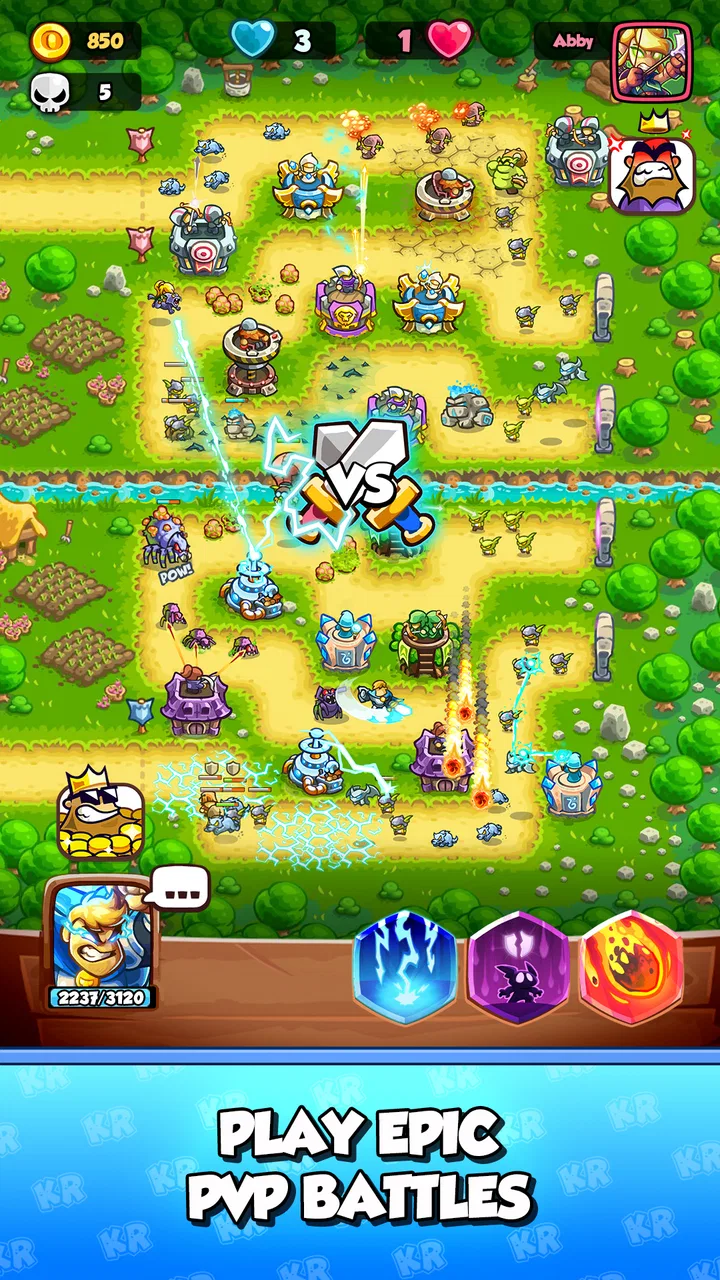
I went into Kingdom Rush Battles: TD Game expecting the familiar lane-planning rhythm of Kingdom Rush, but the player-versus-player focus changes the way I think about every tower and every spare second. This is not simply a longer campaign with another name attached. It is a strategy game built around reacting to another person, protecting your own route, and finding moments when pressure is more valuable than patience.
The basic appeal is easy to understand: I build a defense, watch the battlefield develop, and try to outplay an opponent rather than merely survive a fixed sequence of enemies. That makes even a familiar tower-defense decision feel more personal. A choice that would be safe in a solo stage can become a mistake when another player is actively looking for the gap in my setup.
Ironhide Games has made this a free game in the strategy category, with optional purchases priced from $1.99 to $99.99 per item. It is rated for Everyone 10+, runs on Android 7.0 or later, and the current version is 1.18.1. Those details matter less than the practical question: does the competitive format make the Kingdom Rush formula more interesting, or does it add stress without enough depth? After spending time with it, I think the answer depends heavily on how you like to play.
You May Also Like

 Blood Strike: 2.5 Anniversary
Blood Strike’s Loadouts Turn Every Drop Into a Tactical Gamble
A close look at Blood Strike’s custom loadouts: how fast access to signature weapons reshapes its battle royale rhythm, rewards preparation, and narrows the gap between fights.

 Pandora - Music & Podcasts
Pandora’s Music Is Easy to Start, but Harder to Recover
Pandora’s strength is its low-effort path from a seed to a station. Its weak spot is how much confidence it asks you to place in connection, setup, and quiet recovery.

 8 Ball Pool
 Is Built on Rivalries, Rematches, and Routine
A close look at the rivalries, rematches, shared routines, and unanswered safety questions that turn a quick pool match into a persistent mobile community.

 Samsung Music
’s Quiet Strength Is Playing What You Already Own
Its reach comes less from spectacle than from dependable access to a personal library. That simplicity is both the app’s strongest retention engine and its ceiling.

 AccuWeather: Weather Radar
AccuWeather Review: A Quick, Clear Forecast for Everyday Decisions
For everyday plans, the best forecast is the one you can understand quickly. AccuWeather makes rain timing, radar, and local conditions easy to act on, with a few trade-offs.

 Hill Climb Racing
Why Hill Climb Racing Still Turns Crashes Into One More Run
A tiny car, a bumpy hill and one more upgrade: Hill Climb Racing keeps resurfacing because its simple chaos makes every near-miss feel personal.
More From Our News Desk
View All News


How I approach each match from the first placement
My most reliable baseline workflow starts before I place anything. I look at the available route, identify where enemies will spend the most time exposed, and decide which part of the map I am willing to leave less protected. That last decision is important. In a player-versus-player tower-defense game, trying to make every section equally strong usually leaves the whole defense mediocre.
I prefer to establish one dependable stopping point first instead of scattering early resources across the map. A concentrated defense gives me a clear place to observe what is happening and makes it easier to decide whether the next investment should improve damage, control, or coverage. The temptation is to fill every attractive position immediately, but that can make the opening feel busy while leaving no flexibility for the opponent’s response.
The first few exchanges are useful reconnaissance. I pay attention to the kind of pressure coming toward me, how quickly it reaches my defenses, and whether my opponent is building for a quick attack or a slower buildup. I do not treat the opening as a race to spend everything. I treat it as a way to learn the shape of the match.
That habit also makes the game more approachable for new players. Instead of memorizing a perfect sequence, I ask three simple questions: where is my safest defensive anchor, what threat is currently most urgent, and what can I delay without losing control? Those questions keep the interface from becoming overwhelming and create a repeatable routine that works better than random upgrading.
Why placement matters more than frantic upgrading
Kingdom Rush Battles rewards players who understand timing and position together. A powerful tower in a poor location may contribute less than a modest tower placed where enemies remain vulnerable for longer. I found myself valuing coverage and overlap more than I initially expected, especially when a single weak section could undo a strong setup elsewhere.
I also avoid spending resources simply because I can afford an upgrade. Before confirming a purchase, I consider whether it solves the problem in front of me or merely makes a comfortable area even safer. This distinction is one of the easiest ways to improve. Defensive spending should answer a threat, not just decorate the plan.
One practical use case is a short session during a commute or a break. I can play with a compact decision loop: establish a core, observe the opponent, reinforce the threatened lane, and save enough flexibility for the next exchange. That makes the game feel manageable even when I do not have the time or concentration for a long gaming session.
What I do when the opening goes wrong
A weak start does not always mean the match is finished, but it does require honesty. If I have invested in the wrong area, I stop trying to protect that decision emotionally. I focus on the next point where the defense can still function and use the remaining resources to make that area meaningful.
This is where the competitive format differs from a standard solo tower-defense campaign. In a campaign, I can often retry with a known solution. Here, the opponent may change direction, so recovering requires reading the current situation rather than repeating a memorized build. That uncertainty is exciting, but it also means some matches feel less comfortable for players who want complete control.
Settings and habits that make the experience easier to read
I always check the game’s available settings before settling into serious matches. The most useful reason is not to search for a secret advantage; it is to make the battlefield easier for me to interpret. I want the display, sound, and notifications to support quick decisions rather than compete with them.
Sound is worth considering because tower-defense battles can become visually crowded. If the audio helps me notice important activity, I keep it at a level where it adds awareness without becoming distracting. If I am playing in a public place, I lower it and rely more on visual checks. I do not assume sound alone will tell me what to do, but a comfortable audio setup can make the match feel less tiring.
I also make sure the controls feel predictable before entering a serious battle. A short practice period is useful for learning how to select a tower, inspect an upgrade, and return attention to the action. The goal is to remove hesitation. In a game where the opponent can exploit a delayed response, even a small amount of interface uncertainty becomes costly.
Another good habit is to avoid changing too many preferences between matches. Once I find a comfortable arrangement, I keep it stable so my attention stays on the strategy. Constantly adjusting the presentation can create the illusion of preparation while taking time away from learning the actual battlefield.
Using the pause between decisions wisely
Even when the action is moving quickly, I try to create small moments of review. After a major exchange, I scan the route from beginning to end rather than staring only at the most dramatic point. This helps me notice whether the real problem is an immediate leak or a deeper lack of coverage that will become dangerous later.
That scan is one of the simplest advanced habits I can recommend. New players often watch the nearest enemy and react to whatever is visually loudest. Experienced play is more about comparing the whole defense with the next likely threat. I ask whether my current setup can handle another wave of pressure, not merely whether it survived the last one.
For players who want a calmer experience, I recommend treating each match as a short study session. Try one adjustment, notice the result, and remember the situation that made it necessary. This is more productive than changing several elements at once, because it reveals which decision actually improved the defense.
Faster patterns that help without turning matches into scripts
The fastest improvement I found came from using repeatable patterns rather than trying to invent a new plan every time. My preferred pattern is to build a stable core, reserve a response budget, and only then commit to a stronger specialization. The reserve matters because a player-versus-player match rarely follows the exact line I expect.
I call this the “anchor and answer” approach. The anchor is the part of the defense I trust to handle ordinary pressure. The answer is the resource and positioning flexibility I keep available for the opponent’s unusual move. Without an answer, the anchor becomes rigid. Without an anchor, every response is an emergency.
A second pattern is to improve the weakest meaningful link rather than the most impressive tower. If one section is already performing well, another upgrade there may have little practical effect. Strengthening a vulnerable approach can prevent the opponent from turning one small opening into a decisive advantage.
This does not mean I ignore strong towers. It means I judge them by the work they are doing. A tower that looks powerful but rarely gets useful targets may be less valuable than one that consistently supports the main defensive area. The best choice changes with the route and the opponent, which keeps the strategy from becoming a simple shopping list.
How I manage attention when the screen becomes busy
When several things happen at once, I use a priority order. First I check whether the immediate route is safe. Then I look for a developing weakness. Finally I consider whether I can pressure the opponent or improve my long-term position. This order prevents me from chasing an exciting opportunity while my own defense is already failing.
I also try not to make decisions from frustration. If an opponent’s move surprises me, my first response is to identify what changed. Was the threat faster, stronger, or simply aimed at a different section? Naming the problem narrows the possible answers and keeps the match from becoming a sequence of panic purchases.
Another useful workflow is to review a loss immediately, but briefly. I ask what the first irreversible mistake was, not which final attack ended the match. Often the decisive error happened earlier, when I spent resources on comfort instead of flexibility. This kind of review turns a frustrating result into a specific lesson.
Where this differs from ordinary tower-defense alternatives
Compared with a traditional campaign-focused tower-defense game, this title gives me less certainty and more adaptation. A campaign is often better when I want to learn a level, optimize a route, and enjoy the satisfaction of solving a puzzle at my own pace. Kingdom Rush Battles is better when I want my plan tested by another player’s choices.
It also differs from casual defense games that mainly encourage constant upgrading. Here, the interesting decisions come from timing, positioning, and reading intent. If you enjoy building a set-and-forget defense, this may feel demanding. If you enjoy the mental exchange of predicting what another person will do, the competitive structure adds a layer that solo stages cannot provide.
That comparison helps clarify who should skip it. I would not choose this as my first recommendation for someone who dislikes online competition, becomes annoyed by unpredictable opponents, or wants a fully relaxed experience with no pressure to react. I would also hesitate to recommend it to a player who only enjoys tower defense for its visual charm and does not want to analyze resource choices.
On the other hand, it suits players who already understand basic tower-defense principles and want a reason to rethink them. It is especially appealing if you like short strategic sessions, gradual improvement, and matches where a clever adjustment can matter more than following a fixed walkthrough.
Advanced limits, monetization, and the point where mastery slows down
The free entry is convenient, but the presence of optional purchases means I keep an eye on how comfortable the progression feels over time. Individual items range from $1.99 to $99.99, so players should decide early whether they are happy treating the game as a free competitive pastime or whether they are likely to feel pressure to spend.
My advice is to avoid buying anything simply because a difficult match made me impatient. A purchase cannot replace understanding why a defense failed, and spending during an emotional moment makes it harder to judge the game fairly. I prefer to establish whether I genuinely enjoy the core battles first, then decide whether optional spending adds value for my own habits.
This is also where expectations matter. A competitive game can feel less rewarding if I measure every session by winning. I get more from it when I track practical improvements: recognizing threats earlier, preserving resources, and recovering after a poor opening. Those skills remain useful even in a loss, while a win achieved through an unclear decision teaches me very little.
The limits of repeatable strategy
Repeatable habits are helpful, but they should not become rigid scripts. If I always use the same opening, an attentive opponent can make that predictability a weakness. The anchor-and-answer pattern works because it leaves room to adapt; it fails when I turn the anchor into an automatic sequence.
There is a similar limit to defensive caution. Saving resources gives me options, but saving too much can surrender the initiative. I have to distinguish between patience and hesitation. Patience means waiting for useful information. Hesitation means refusing to commit even after the threat is clear.
The game can also be mentally tiring in a way that solo tower defense is not. Reading another player, managing the route, and making purchases under pressure demand more attention than simply following a stage. For that reason, I prefer shorter focused sessions. When I am tired, I make poorer decisions and blame the match for problems caused by my own lack of concentration.
What beginners should learn first
New players do not need to understand every possible interaction immediately. I would start by learning the map’s important defensive zones, practicing economical placement, and watching how quickly a weak lane becomes dangerous. The first goal is not to create a perfect build; it is to understand why a position succeeds or fails.
I would also avoid copying advanced players too early. A build that works for someone with strong timing may leave a beginner unable to explain its choices. It is better to use a simple setup, identify one mistake, and adjust one thing in the next match. That approach builds judgment instead of dependence on instructions.
Players who are already experienced should focus on information quality. Notice what the opponent reveals, what they ignore, and when they are forced to spend. The strongest advantage is often not a faster finger but a clearer picture of the match. Once I know what the opponent cannot comfortably answer, my own choices become more deliberate.
My verdict after learning its competitive rhythm
Kingdom Rush Battles: TD Game works best when I approach it as a focused strategy contest rather than a passive tower-defense toy. The familiar foundation makes the first matches approachable, while the player-versus-player structure gives every placement more weight. I like that my decisions are tested by an opponent instead of only by a predetermined stage.
The game has also built a sizable audience, with an average rating of 4.3 from around 71 thousand ratings and more than a million installs. Those figures suggest that the format has found players who want Kingdom Rush-style strategy with a competitive edge. I would not treat popularity as proof that it will suit everyone, but it does match my impression that the game has a clear identity.
Its strongest quality is the way it rewards repeatable thinking without making every match identical. I can use a baseline workflow, check my settings, build an anchor, preserve an answer, and review my mistakes, yet I still need to adapt when the opponent changes direction. That combination gives the game more depth than a simple upgrade race.
Its main weakness is the same feature that makes it interesting: competition adds pressure. Players looking for a quiet, predictable campaign may prefer a conventional solo tower-defense alternative. The optional purchase range may also make cautious players want to understand their own spending boundaries before investing time in the progression.
For me, it is worth trying if you enjoy strategic decisions that unfold quickly and you are willing to learn from losses. I would recommend beginning with a modest goal: survive the opening without overspending, identify the opponent’s main idea, and improve one response at a time. Once that rhythm becomes natural, the battles feel less like frantic defense and more like a conversation conducted through towers, timing, and space.
The game was released on October 8, 2025, and its current version is 1.18.1. With its Everyone 10+ rating and free starting point, it is easy to sample, but the real test is whether you enjoy the mental workload of live strategy. If you want a competitive tower-defense game where disciplined habits matter as much as quick reactions, this is a strong choice; if you want a guaranteed, low-pressure puzzle, choose a solo alternative instead.
FAQs for Kingdom Rush Battles: TD Game
01What is Kingdom Rush Battles: TD Game?
Kingdom Rush Battles: TD Game is a tower defense and player-versus-player strategy game set in the Kingdom Rush universe. You build defensive positions, place towers, deploy heroes or units, and try to stop enemy waves while attacking your opponent’s side. It combines the familiar fantasy style of Kingdom Rush with faster competitive matches, tactical decisions, and progression systems designed for repeated play.
02Can I play Kingdom Rush Battles offline?
The game is primarily designed around online competitive gameplay, so an internet connection is generally required for matchmaking, battles, account progression, events, and other connected features. Some menus or training-related content may be accessible without a connection, but you should not expect the complete experience to work offline. A stable Wi-Fi or mobile data connection is recommended to avoid disconnections during matches.
03Is Kingdom Rush Battles: TD Game free to download?
Kingdom Rush Battles: TD Game can be downloaded without an upfront purchase on supported mobile platforms, but the free-to-play model may include optional in-app purchases. These purchases can provide currency, cosmetic items, progression advantages, or other resources, depending on the current version. You can play without spending money, although unlocking content and progressing may take more time as a free player.
04Is the game suitable for beginners who have never played Kingdom Rush?
Yes, newcomers can learn the basic mechanics through introductory guidance and early matches, especially if they already understand traditional tower defense games. However, competitive battles become more demanding as opponents improve. Beginners should experiment with tower combinations, study enemy types, manage resources carefully, and avoid upgrading randomly. Familiarity with the original Kingdom Rush games is helpful but not required.
05What devices and features are needed to run the game smoothly?
The exact requirements depend on whether you use Android or iOS and may change with future updates. In general, the game requires a relatively recent device, enough free storage for installation and updates, and a supported operating-system version. Performance can vary on older phones, particularly during busy battles. Before downloading, check the official store listing for current compatibility, permissions, and connection requirements.
Pros
- Fast-paced tower defense matches that are easy to start but hard to master.
- Distinct hero and tower abilities create plenty of tactical variety.
- Bright cartoon visuals and lively animations make battles enjoyable to watch.
- Short matches suit quick gaming sessions on mobile devices.
- Competitive progression gives skilled players a reason to keep improving.
Cons
- Matchmaking can feel uneven when experienced players face newcomers.
- Some upgrades and content may require significant time or spending to unlock.
- Limited strategic options can make losing matches feel repetitive.
- Online-focused play depends on a stable internet connection.
- Frequent battles may drain battery quickly on older phones.

Kingdom Rush Battles: TD Game
Gallery